



 English
What Is a Conical Washer?
A conical washer is a mechanical washer with a tapered or cone-shaped profile instead of a flat geometry. Also known as cone washers or cone shaped washers, this design allows the washer to elastically deform when axial load is applied. Unlike flat washers, which only distribute load, conical washers act as a spring element within the fastening system.
When compressed between a bolt head (or nut) and a contact surface, the conical washer generates a restoring force. This force helps maintain consistent clamping pressure, even when the assembly is subjected to vibration, impact, or thermal expansion.
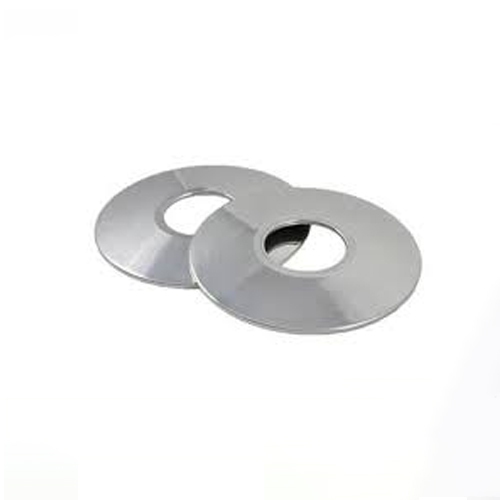
How a Conical Washer Works
The working principle of a conical washer is closely linked to spring washer use, but with greater precision and reliability. As tightening torque is applied, the washer begins to flatten, storing elastic energy. This stored energy continuously presses against the fastener, compensating for:
Material settling
Thermal expansion and contraction
Micro-movements caused by vibration
Wear over time
Because of this behavior, conical disc spring washers are widely used in applications where joint reliability is critical.
Key Types of Conical Washers
Conical Spring Washer
A conical spring washer is designed to provide both preload and elasticity. It is often used where limited installation space requires a compact yet powerful spring element. Compared to traditional split spring washers, it delivers more predictable and stable performance.
Belleville Conical Spring Washer
The belleville conical spring washer is one of the most common and standardized forms of conical washers. It offers high load capacity with controlled deflection. Belleville washers can be stacked in series or parallel to fine-tune load and spring characteristics, making them ideal for heavy-duty industrial use.
Cone Lock Washer
A cone lock washer is optimized for anti-loosening performance. Its conical profile ensures continuous pressure against the fastener, effectively resisting vibration-induced loosening in dynamic systems such as engines, gearboxes, and rail equipment.
Conical Contact Washer
A conical contact washer is often used in electrical and grounding applications. Its shape increases contact pressure, improves conductivity, and compensates for uneven surfaces, ensuring stable electrical connections.
Cone Shaped Washers and Cone Washers
The terms cone shaped washers and cone washers broadly describe washers with tapered geometry. They are commonly used across mechanical, structural, and electrical assemblies where preload control is required.
Materials Used in Conical Washers
Carbon Steel Washer Options
A carbon steel washer is the most widely used material choice for conical washers due to its excellent balance of strength, elasticity, and cost-efficiency. High-carbon spring steels provide reliable elastic deformation and long service life.
Common materials include:
65Mn
SK5
SK7
These materials are known for high fatigue resistance and stable spring properties after heat treatment.
Technical Specifications of Conical Washers
High-quality conical washers are manufactured with precise dimensional and mechanical control. Typical specifications include:
Dimensional Range
Outer Diameter (OD): 1.7 – 28 mm
Inner Diameter (ID): 0.83 – 20.5 mm
Thickness: 0.15 – 2.0 mm
This wide dimensional range allows conical washers to be used in both micro-assemblies and heavy-duty mechanical systems.
Hardness
HRC: 43 – 50
This hardness range ensures optimal elasticity while maintaining wear resistance and fatigue strength.
Surface Treatment
To enhance corrosion resistance and service life, conical washers may undergo various surface treatments, including:
Eco-friendly nickel plating
Electroless nickel
Blackening
Zinc-nickel alloy coating
These treatments improve performance in harsh environments such as high humidity, chemical exposure, or outdoor installations.
Function and Performance Advantages
One of the most important functions of a conical washer is its ability to generate torque within the shaft, which significantly impacts the overall service life of the fastened assembly. By maintaining consistent preload, the washer prevents loosening, reduces stress concentration, and minimizes fatigue failure.
Key performance benefits include:
Stable preload under dynamic loads
Improved vibration resistance
Compensation for thermal expansion
Reduced maintenance frequency
Extended fastener and joint life
These advantages make conical disc spring washers a preferred choice in demanding applications.
Conical Washer Installation: Best Practices
Proper conical washer installation is essential to achieve the desired mechanical performance.
Installation Guidelines
Correct Orientation
The washer is usually installed with the smaller diameter facing the bolt head or nut, unless otherwise specified.Controlled Torque
Avoid fully flattening the washer, as excessive torque eliminates its spring function.Clean Contact Surfaces
Ensure mating surfaces are smooth and free from debris for even load distribution.Stacking Configuration
When using multiple belleville conical spring washers, stacking in series increases deflection, while stacking in parallel increases load capacity.
Correct installation ensures that the conical washer maintains its elastic properties throughout its service life.
Spring Washer Use vs. Conical Washer Use
Traditional spring washer use, such as split lock washers, relies on friction and sharp edges to resist loosening. In contrast, conical washers rely on elastic deformation and controlled preload.
Advantages of Conical Washers
More predictable spring behavior
Higher load-bearing capacity
Better performance under vibration
Less surface damage to mating parts
As a result, conical spring washers are increasingly replacing conventional spring washers in high-performance applications.
Applications of Conical Washers
Automotive Industry
Used in engines, transmissions, braking systems, and suspension assemblies where vibration resistance is essential.
Industrial Machinery
Belleville conical spring washers are widely used in presses, pumps, compressors, and heavy equipment to handle high axial loads.
Electrical and Energy Systems
Conical contact washers ensure stable electrical grounding and consistent contact pressure in power distribution systems.
Construction and Infrastructure
Structural assemblies use cone lock washers to maintain preload under long-term static and dynamic loads.
Precision Equipment
Small-diameter cone shaped washers are used in electronics, instrumentation, and automation systems where space is limited.
Choosing the Right Conical Washer
When selecting a conical washer, consider:
Load and deflection requirements
Installation space constraints
Environmental conditions
Material and surface treatment
Desired service life
Matching these factors ensures optimal fastening performance and reliability.
Conclusion
A conical washer is a critical fastening component that combines load distribution with spring functionality. Whether used as a conical spring washer, belleville conical spring washer, cone lock washer, or conical contact washer, its ability to generate controlled preload and torque within the shaft significantly enhances joint reliability and service life.
With precise dimensions, high-quality materials such as carbon steel washer grades (65Mn, SK5, SK7), and advanced surface treatments, conical disc spring washers have become indispensable in modern engineering. Proper conical washer installation and correct application ensure long-lasting performance, making cone-shaped washer solutions a cornerstone of advanced mechanical fastening systems.