



 English
A Complete Guide to Proper Washer Placement, Spring washer Use, and Installation Best Practices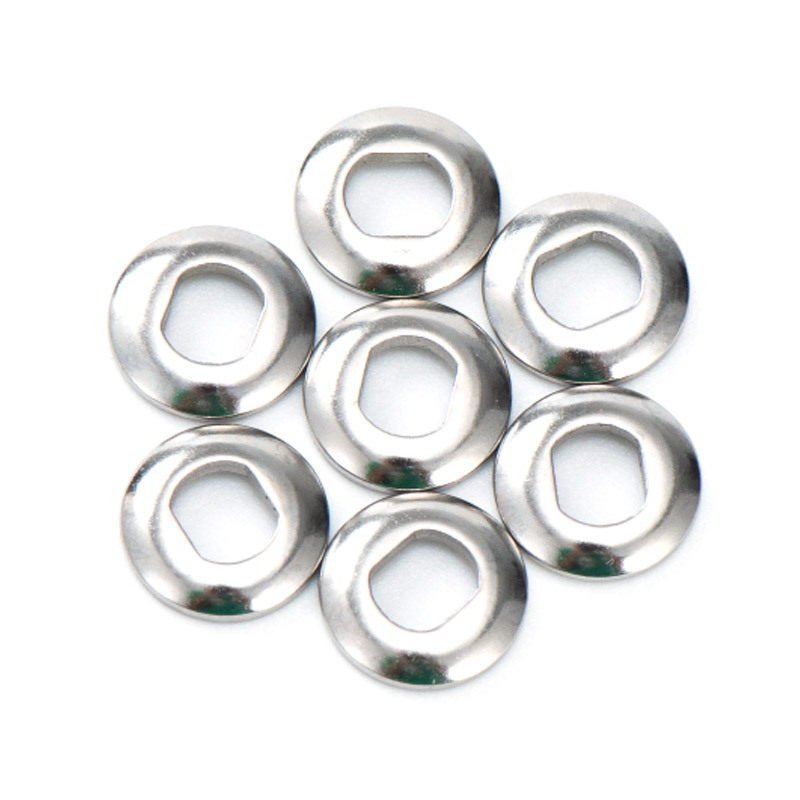

In mechanical assembly, structural fastening, and industrial applications, there is one seemingly simple question that engineers, technicians, and buyers often ask:
Does the washer go on the nut side?
While washers may appear to be minor components, their placement has a significant impact on load distribution, joint reliability, vibration resistance, and long-term performance. This is especially true when using functional washers such as Spring Washers, spring loaded washers, Belleville washers, and cone washers.
In this article, we will explore the correct washer placement principles, explain Spring Washer use, and clarify how different washer types—such as m6 spring washer, m8 spring washer, m10 spring washer, m16 spring washer, 1 4 spring washer, and 1 2 spring washer—should be installed in real-world applications.
Understanding the Role of a Washer in Fastening Systems
Before answering does the washer go on the nut side, it is important to understand what a washer actually does.
In general, washers serve several key purposes:
Distribute clamping force evenly over a larger surface
Protect the contact surface from damage
Compensate for surface irregularities
Provide elastic preload or vibration resistance
For functional washers, especially spring-type designs, spring washer use is not about spacing—it is about maintaining preload and preventing loosening.
Does the Washer Go on the Nut Side? The General Rule
In most applications, the answer is yes
As a general fastening rule, the washer should be placed on the nut side of the joint. This is because:
The nut is typically the rotating component during tightening
Washers reduce friction between the nut and the clamped surface
Spring washers require compression from the rotating element to function properly
The washer protects the surface beneath the nut from wear
This rule applies to most standard fasteners, including:
m6 spring washer
m8 spring washer
m10 spring washer
m16 spring washer
1 4 spring washer
1 2 spring washer
In standard bolt–nut assemblies, placing the washer directly under the nut ensures optimal load transfer and anti-loosening performance.
Spring Washer Use: Why Placement Matters
A spring washer is designed to generate axial force through elastic deformation. As the nut is tightened, the washer compresses and stores energy, acting as a spring loaded washer that resists loosening caused by vibration, thermal expansion, or material creep.
If installed incorrectly, the washer may:
Fail to generate sufficient preload
Lose its spring function
Damage the joint surface
Provide little to no anti-loosening effect
That is why correct spring washer use almost always places the washer on the nut side.
Common Spring Washer Sizes and Applications
Different washer sizes are selected based on bolt diameter and load requirements:
m6 spring washer – electronics, light-duty assemblies
m8 spring washer – general machinery, brackets
m10 spring washer – automotive components, enclosures
m16 spring washer – heavy machinery, steel structures
1 4 spring washer – inch-based equipment, North American standards
1 2 spring washer – large industrial or structural fasteners
Regardless of size, correct placement remains consistent: under the nut whenever possible.
What Is a Belleville Washer?
A common question in fastening design is:
What is a Belleville washer?
A Belleville washer is a conical, disc-shaped washer that functions as a high-performance spring. Compared to standard split spring washers, it offers:
Higher load capacity
Predictable spring characteristics
Compact design for limited space
Ability to stack in series or parallel
Belleville washers are widely used as spring loaded washers in applications requiring precise preload control.
Does a Belleville Washer Go on the Nut Side?
In most fastening systems, Belleville washers are installed on the nut side, just like standard spring washers. However, there are two important considerations:
Orientation matters – the cone direction affects load and deflection
Design intent matters – engineering drawings should always be followed
When properly oriented, a Belleville washer provides consistent preload and long-term joint stability.
Cone Washers: Similar but Not the Same
Cone washers resemble Belleville washers in shape but typically serve different purposes. They are often used to:
Compensate for angular misalignment
Improve seating on uneven surfaces
Provide limited elastic deformation
While cone washers may offer some spring effect, they are not a direct replacement for Belleville washers in high-load applications.
In most cases, cone washers are still placed on the nut side, especially when the nut is the rotating component during tightening.
When the Washer Should NOT Be on the Nut Side
Although placing the washer under the nut is the standard practice, there are exceptions.
1. When the Bolt Head Rotates Instead of the Nut
Examples include:
Welded or captive nuts
Threaded holes in base materials
In these cases, the washer should be placed under the bolt head, since that is the rotating component.
2. Dual-Washer or Special Stack Configurations
Some applications require:
Flat washer + spring washer combinations
Multiple Belleville washers in a stack
In such cases, washer placement and orientation must follow the engineering specification exactly.
Common Installation Mistakes to Avoid
Placing a spring washer under a Flat washer
Installing a Belleville washer upside down
Stacking multiple spring washers randomly
Using spring washers directly on soft materials without a flat washer
These mistakes significantly reduce the effectiveness of spring washer use and may cause premature loosening or joint failure.
Best Practices for Washer Installation
Place washers on the rotating side of the fastener
Position spring washers directly under the nut
Use Belleville washers for high-load or vibration-prone joints
Select the correct size (m6, m8, m10, m16, 1 4, 1 2 spring washer)
Always follow engineering drawings and torque specifications
Final Answer: Does the Washer Go on the Nut Side?
So, does the washer go on the nut side?
In the vast majority of fastening applications, the answer is yes.
This is especially true when using:
spring washer
spring loaded washer
Belleville washer
m8, m10, m16 spring washer
1 4 spring washer or 1 2 spring washer
Correct washer placement is a small detail that makes a big difference in joint reliability, safety, and service life.