



 English
In mechanical assembly, washers are often considered simple components, but choosing the wrong washer type or installing them in the wrong order can directly affect fastening reliability. Among different washer solutions, the combination of a Flat Washer and a lock washer is widely used in automotive parts, electronic devices, machinery, and industrial equipment.
Many engineers and purchasers ask: how to use a lock washer with a flat washer? Where does the lock washer go? Understanding the correct flat washer lock washer nut order is essential for preventing loosening problems and improving product durability.
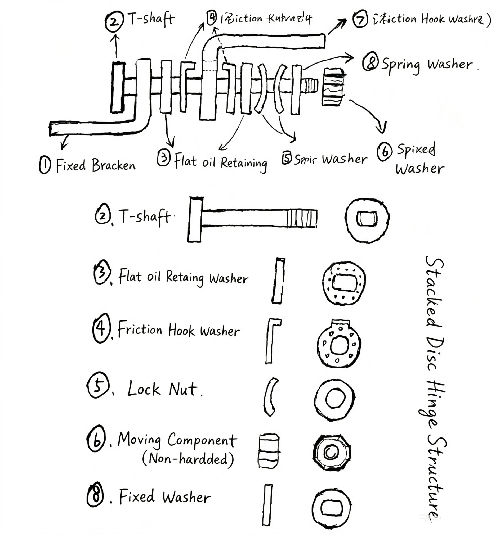
Why Are Washers Important in Mechanical Assembly?
Washers are not only simple spacers. They play important roles in distributing load, protecting surfaces, improving fastening stability, and controlling friction between components.
A typical fastening structure may include a bolt, flat washer, lock washer, and nut. Each component has a different function:
Flat washer: Distributes the load of the bolt or nut and prevents surface damage.
Lock washer: Helps resist loosening caused by vibration or repeated movement.
Nut: Provides the clamping force required to secure the assembly.
How to Use a Lock Washer with a Flat Washer?
The correct installation sequence depends on the application, but the most common arrangement is:
Bolt head → Flat washer → Lock washer → Material → Nut
Or:
Bolt head → Flat washer → Material → Lock washer → Nut
In many industrial applications, the lock washer is placed directly under the nut because its main function is to prevent the nut from rotating loose. The flat washer is placed between the bolt head or nut and the workpiece to spread the tightening pressure.
Where Does Lock Washer Go?
A common question is: where does lock washer go?
Generally, the lock washer should be installed on the side where the loosening force occurs. In a standard bolt and nut connection, this usually means placing the lock washer directly below the nut.
The reason is simple: when vibration or external force tries to loosen the nut, the lock washer creates additional resistance through its spring force or friction structure.
However, different applications may require different solutions. For high vibration environments, aerospace equipment, automotive parts, or precision machinery, engineers may choose specialized Locking Washers instead of traditional Spring Washers.
What Do Lock Washers Do?
So, what does a lock washer do?
A lock washer is designed to improve fastening security by preventing Bolts and nuts from loosening during operation.
The main functions include:
Increasing friction between fastening components.
Maintaining preload force under vibration conditions.
Reducing the risk of accidental loosening.
Improving connection reliability in long-term use.
For equipment exposed to continuous vibration, temperature changes, or repeated mechanical movement, selecting the right lock washer can significantly improve assembly performance.
What Are the Different Lock Washer Types?
There are several types of lock washers available depending on application requirements.
1. Split Lock Washer
The split lock washer is one of the most common types. It has a split ring design that creates spring tension after compression, helping resist loosening.
2. External Tooth Lock Washer
External tooth lock washers feature teeth around the outside edge. The teeth grip the contact surface and increase resistance against rotation.
3. Internal Tooth Lock Washer
Internal tooth lock washers have teeth inside the washer diameter and are commonly used where a smooth external surface is required.
4. Wave Lock Washer
Wave washers provide spring force through their curved shape and are suitable for applications requiring controlled pressure and vibration compensation.
Flat Washer Lock Washer Nut Order: Common Installation Mistakes
Although washers are small components, incorrect installation can reduce fastening performance.
Mistake 1: Installing the Lock Washer in the Wrong Position
A lock washer placed away from the fastening surface may not effectively prevent rotation. The locking function depends on direct contact and proper compression.
Mistake 2: Using a Lock Washer Without a Flat Washer
In some applications, a lock washer alone may damage softer materials because the concentrated pressure can mark the surface. A flat washer helps distribute the load.
Mistake 3: Choosing the Wrong Washer Material
Different environments require different materials. Stainless steel washers are commonly used for corrosion resistance, while carbon steel washers are preferred for cost-sensitive applications.
How Manufacturers Improve Washer Performance?
For high-volume industrial products, standard washers may not always meet specific assembly requirements. Customized washer designs can optimize friction, thickness, hardness, and dimensional accuracy.
As a professional metal parts manufacturer, Mengpeng Parts provides customized precision washers and metal components for various industries, helping customers solve problems related to fastening reliability, assembly efficiency, and cost control.
From material selection and stamping processes to surface treatment and quality inspection, customized solutions allow manufacturers to achieve better performance compared with standard components.
Choosing the Right Washer Solution for Your Application
Selecting the correct washer depends on several factors:
Required locking performance.
Operating vibration level.
Assembly structure.
Material compatibility.
Production volume and cost requirements.
For simple applications, a standard flat washer and lock washer combination may be sufficient. For precision products requiring long service life, customized metal washer solutions can provide better reliability.
Conclusion
Understanding how to use a lock washer with a flat washer helps engineers avoid fastening failures and improve product durability.
The correct flat washer lock washer nut order ensures proper load distribution and locking performance. However, different applications require different washer designs and materials.
Mengpeng Parts specializes in customized metal components and precision washer solutions, supporting global customers with reliable manufacturing capabilities.
Learn more about our engineering solutions and product applications:Metal Washer Design and Manufacturing Insights