Product Description
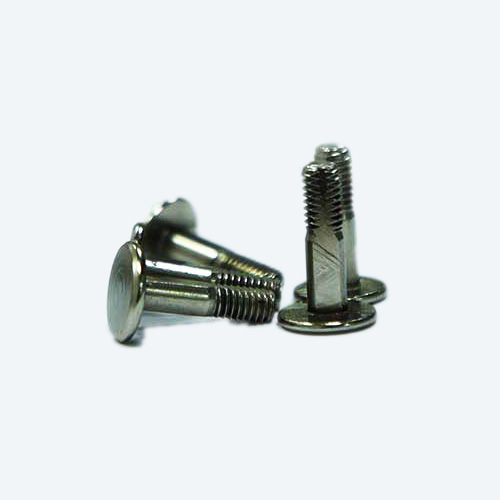
Lag Bolts, also known as lag screws, are heavy-duty fasteners designed to provide reliable strength and long-term stability in mechanical and industrial assemblies. As critical bolts used for connecting shaft components, lag bolts ensure secure fastening, accurate alignment, and structural integrity across a wide range of applications.
Unlike standard nut bolt assemblies, lag bolts are typically driven directly into pre-drilled holes, offering excellent holding power without the need for additional fastening hardware. Their robust design makes them comparable to high tensile bolts, especially in applications exposed to vibration, dynamic loads, or repeated stress.
Manufactured from premium spring steel materials such as 65MN, SK5, and SK7, these lag bolts deliver consistent performance and durability, making them suitable for demanding operating environments.
Technical Parameters
| Parameter | Specification |
|---|
| Outer Diameter (OD) | M4 – M8 |
| Length | 10.5 – 56 mm |
| Flat Width | 3.2 – 6 mm |
| Material | 65MN / SK5 / SK7 |
| Installation | Standard tools |
| Performance | Vibration-resistant, reusable |
Key Features
High-Strength Fastening
Designed to function as primary bolts in shaft and mechanical connections, lag bolts provide reliable clamping force and load-bearing capacity similar to high tensile bolts.
Vibration-Resistant Design
The integrated locking feature prevents loosening under vibration or dynamic loads, outperforming conventional hex screw and standard surface bolt designs.
Precision Head Options
While typically supplied with hex heads, lag bolts can be compared with allen head bolts in applications where controlled torque and compact installation are required.
Durable Materials
Manufactured from hardened spring steels (65MN, SK5, SK7), these lag bolts maintain strength, elasticity, and wear resistance over repeated use.
Product Advantages
Reliable Structural Integrity
Lag bolts serve as the main fasteners connecting all shaft components, ensuring secure assembly, maintaining alignment, and supporting smooth mechanical operation.
Enhanced Safety
Stable fastening reduces the risk of component failure in critical systems, making lag bolts ideal for industrial and mechanical safety-focused applications.
Reusable and Durable
Unlike disposable fasteners, these lag screws can be installed and removed multiple times without losing locking effectiveness or structural strength.
Easy Installation and Removal
Compatible with standard tools, lag bolts simplify maintenance and installation compared to complex nut bolt systems or specialty allen head bolts.
Application Scenarios
Mechanical Shaft Assemblies
Lag bolts are widely used to connect shaft components, ensuring alignment and secure torque transmission.
Industrial Equipment
Ideal for machinery exposed to vibration, shock, or dynamic loads where standard hex screws may loosen over time.
Automation and Manufacturing Systems
Used in production equipment, conveyors, and motion systems where reliability and repeatable fastening are required.
Construction and Structural Support
Lag bolts provide stronger holding power than traditional surface bolts, making them suitable for frames, brackets, and load-bearing connections.
Maintenance and Retrofit Projects
Their reusability and ease of installation make lag bolts a preferred alternative to traditional bolts and nut bolt assemblies.
Lag Bolts vs Other Fasteners
| Fastener Type | Key Difference |
|---|
| Lag Bolts / Lag Screws | High holding power, vibration resistance |
| Hex Screw | Easier installation but lower pull-out strength |
| Allen Head Bolts | Compact head, precise torque control |
| High Tensile Bolts | Similar strength, usually require nut |
| Surface Bolt | Primarily for surface mounting, lower load |
FAQ – Lag Bolts
Q1: What is the difference between lag bolts and lag screws?
A: The terms lag bolts and lag screws are often used interchangeably. Technically, lag bolts have hex heads and are driven with a wrench, while lag screws may refer more broadly to heavy-duty threaded fasteners driven into wood or metal.
Q2: Do lag bolts require a nut?
A: No. Unlike a traditional nut bolt system, lag bolts are typically installed directly into a threaded or pilot hole.
Q3: Are lag bolts suitable for vibration environments?
A: Yes. Their vibration-resistant locking design prevents loosening, making them superior to standard hex screws or basic surface bolts.
Q4: Can lag bolts replace high tensile bolts?
A: In many applications, lag bolts offer comparable performance to high tensile bolts, especially where a nut is impractical or space is limited.
Q5: Are these lag bolts reusable?
A: Yes. Made from high-quality spring steel, they can be reused multiple times without losing fastening effectiveness.
Conclusion
Lag bolts are essential heavy-duty fasteners that combine strength, reliability, and ease of installation. Whether used as lag screws in shaft assemblies or as an alternative to high tensile bolts, allen head bolts, or hex screws, they provide secure, vibration-resistant fastening for demanding industrial applications.
With durable materials, precise dimensions, and proven performance, lag bolts are a dependable solution for long-term mechanical integrity and safety.

 English