



 English
Engineer’s Warning: Why SPCC Washers Fail on PCB Terminals (Mild Steel vs SPCC)
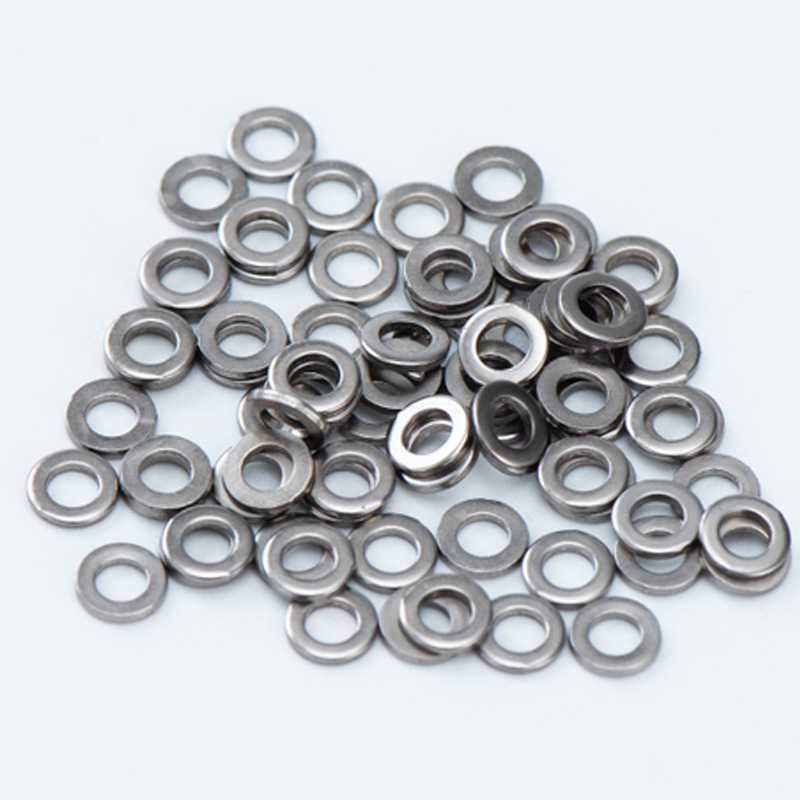
Many electronic structure engineers and procurement teams have encountered a confusing batch failure: the prototype works perfectly, but mass-produced devices suffer from intermittent poor contact, loose PCB terminals, and unstable circuit conduction after 2–3 months of use.
Most teams spend a lot of time checking wires, screws, and welding quality, yet ignore the tiny accessory behind the failure — the wrong washer type for PCB fixed terminals.
In electronic precision assembly, SPCC cold-rolled steel washers and standard mild steel Flat Washers look almost identical in appearance. However, their performance difference under long-term temperature cycling and vibration is huge. This article shares practical engineering selection experience to help electronic manufacturers avoid mass after-sales risks.
The Hidden Danger of SPCC Washers in PCB Terminal Assembly
SPCC washers are widely used in low-standard hardware scenarios due to their low cost and easy stamping. But they are not suitable for 3C electronics, industrial control PCB terminals, and smart wearable equipment assembly.
The biggest flaw of SPCC material is low hardness and poor compression resistance. Electronic equipment generates heat during operation and cools down when shut down, forming a long-term temperature cycle environment. Under continuous screw preload and thermal expansion and contraction, SPCC washers are prone to creep deformation and permanent compression collapse.
On the surface, the screws are tightly locked, but the internal pressure is lost, resulting in loose PCB terminals, offset circuit contacts, and intermittent signal failure. In addition, most ordinary SPCC washers adopt rough stamping process without precise deburring, which easily scratches PCB copper foil and insulating layers, causing hidden short-circuit risks.
Why Mild Steel Washers Are the First Choice for PCB Precision Assembly
Different from ordinary SPCC washers, professional mild steel Flat washers for electronic assembly are upgraded in material hardness, dimensional tolerance and surface processing, fully adapting to the long-term stable operation requirements of precision electronic components such as PCB terminals, sensor bases and micro motor modules.
Made of high-quality 65Mn, SK5 and SK7 materials, these washers maintain a stable hardness of HRC 43–50. They have strong compression and deformation resistance, will not collapse or loosen under long-term temperature changes and equipment vibration, and permanently lock the assembly preload force. At the same time, strict precision stamping and automatic deburring technology ensure smooth and burr-free inner and outer holes, which will not damage PCB boards and precision electronic structures.
Various surface treatments such as black oxide, environmental nickel and zinc-nickel alloy can avoid electroplating peeling and metal powder falling off, preventing contamination of precision chips and circuit modules in closed electronic equipment.
SPCC vs Mild Steel Washers: Core Performance & Scenario Comparison
| Comparison Item | SPCC Cold Rolled Washers | Precision Mild Steel Washers |
|---|---|---|
| Material Hardness | Low hardness, easy to deform under pressure | HRC 43–50, high hardness, strong compression resistance |
| Temperature Cycle Resistance | Prone to creep, loose preload after heating and cooling | Stable performance, no deformation in long-term thermal cycle |
| Surface & Burr | Rough stamping, easy to have burrs, scratch PCB board | Precision deburring, smooth surface, no damage to electronic parts |
| Torque Stability | Unstable friction, easy to loosen due to vibration | Uniform stress, controllable torque, consistent assembly effect |
| Electronic Application Suitability | Not recommended for PCB terminals & precision electronics | Perfect for PCB terminals, wearable devices, automotive electronics, micro motors |
| Cost Performance | Low cost, low precision, high after-sales risk | Moderate cost, high stability, greatly reduce failure rate |
Engineer Selection Rules: Clear Usage Scenarios
When to use SPCC washers?
They are suitable for low-precision and non-long-term vibration scenarios, including ordinary furniture assembly, common mechanical fixed parts, and temporary fixture installation. For these scenarios, low cost is the core demand, and SPCC washers can fully meet the standard requirements.
When to choose precision mild steel washers?
For all precision electronic assembly scenarios requiring long-term stability: PCB wiring terminal fixing, notebook hinge structure, smart watch internal module assembly, automotive electronic sensor base, and micro fan motor accessories. Adopting mild steel washers can fundamentally solve loose terminals and unstable signal transmission problems.
FAQ For Electronic Hardware Buyers & R&D Engineers
In the electronic manufacturing industry, most batch quality problems do not come from large structural design defects, but from the negligence of tiny standard parts. A cheap washer may lead to batch equipment rework, customer complaints and brand loss.
PCB terminal assembly focuses on constant pressure, no deformation, no debris, and stable torque. Abandoning low-precision SPCC washers and adopting professional mild steel Precision Washers is the most cost-effective quality optimization solution for electronic OEM and hardware assembly factories.
For standard specifications, electronic assembly matching solutions and free sample testing of precision mild steel washers, please visit our dedicated product page:
https://www.mengpengparts.com/flat-washer/21