



 English
How Friction Washers Improve Torque Hinge Performance in Modern Electronics
In today's electronics market, consumers expect every movement to feel smooth, precise, and durable. Whether opening a premium laptop, adjusting a monitor stand, positioning a medical display, or rotating a smart home control panel, users immediately notice the quality of a hinge mechanism.
Behind that seemingly simple movement lies a sophisticated engineering system involving torque hinges, friction hinges, rotary shafts, Belleville washers, friction washers, and precision hardware components. Among these parts, friction washers are often overlooked despite being one of the most critical elements affecting hinge performance.
For manufacturers of laptops, monitors, POS systems, automotive displays, industrial equipment, and medical devices, friction washers play a key role in delivering consistent torque, reducing wear, improving reliability, and enhancing the overall user experience.
Key Takeaway: A well-designed friction washer can significantly improve torque consistency, extend hinge lifespan, reduce maintenance costs, and create the premium feel that modern consumers expect from high-quality electronics.
Understanding Torque Hinges and Friction Hinges
A torque hinge is a mechanical hinge designed to provide controlled resistance during movement. Unlike traditional hinges that simply rotate freely, torque hinges allow a display or panel to stay in a chosen position without additional support.
This functionality is achieved through a carefully engineered friction system that generates resistance between rotating components.
Common Applications of Torque Hinges
Laptop displays
Monitor stands
Medical monitors
Vehicle infotainment screens
POS terminals
Industrial control panels
Smart home touchscreens
Professional camera equipment
In nearly all these applications, friction washers are responsible for generating and maintaining the required torque level.
What Is a Friction Washer?
A friction washer is a precision-engineered washer designed to create controlled resistance between two mating surfaces. Unlike standard Flat Washers, which mainly distribute load, friction washers are specifically intended to influence rotational behavior.
Within a torque hinge assembly, the washer works together with shafts, springs, and mating surfaces to create a predictable level of friction.
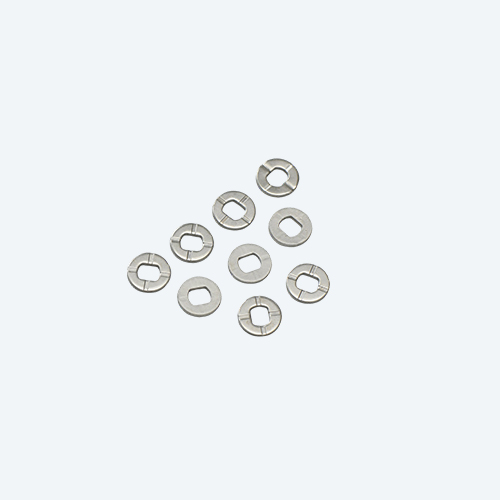
| Washer Type | Primary Function |
|---|---|
| Flat Washer | Load distribution |
| Spring Washer | Maintain preload force |
| Belleville Washer | Generate axial spring force |
| Friction Washer | Create controlled rotational resistance |
| Nylon Washer | Reduce noise and surface wear |
How Friction Washers Generate Torque
The performance of a torque hinge depends on the interaction between friction surfaces and preload force.
A typical torque hinge assembly consists of:
Rotary shaft
Friction washer
Belleville Spring Washer
Lock nut
Housing bracket
When the assembly is tightened, the Belleville washer generates a constant axial load. This load compresses the friction washer against adjacent surfaces, creating friction that resists rotation.
As users move the hinge, controlled friction provides smooth resistance throughout the range of motion.
Why Friction Washers Are Essential in Modern Electronics
Electronics manufacturers face increasing demands for thinner designs, lighter products, and longer lifespans.
Without properly engineered friction washers, several issues can occur:
Display wobble
Screen dropping
Uneven movement
Premature hinge failure
Noise generation
Customer dissatisfaction
A high-quality friction washer helps eliminate these problems while improving long-term reliability.
Key Benefits of Friction Washers
| Benefit | Impact on Product Performance |
|---|---|
| Consistent Torque | Stable positioning over time |
| Smooth Motion | Premium user experience |
| Reduced Wear | Longer service life |
| Lower Noise | Quieter operation |
| Compact Design | Supports thin product designs |
| Vibration Resistance | Improved stability during transportation |
Materials Used in Friction Washers
Material selection significantly affects friction coefficient, wear resistance, corrosion resistance, and torque stability.
| Material | Advantages | Typical Application |
|---|---|---|
| 65Mn Spring Steel | High strength and durability | Laptop hinges |
| SK5 Steel | Excellent fatigue resistance | Monitor hinges |
| SK7 Steel | Precision performance | Industrial equipment |
| Stainless Steel | Corrosion resistance | Medical devices |
| Nylon | Noise reduction | Consumer electronics |
| PTFE Composite | Controlled friction properties | Automotive displays |
Applications in Consumer Electronics
Laptop Hinges
Laptop manufacturers require hinges capable of surviving tens of thousands of open-and-close cycles while maintaining consistent resistance.
Friction washers help:
Prevent screen wobble
Improve opening feel
Extend hinge life
Support lightweight designs
Monitor Arms and Stands
Professional monitors often require precise positioning. Friction washers provide sufficient holding force without sacrificing adjustability.
Foldable Devices
As foldable technology evolves, friction control becomes even more important for maintaining reliable motion and positioning.
Applications in Automotive Electronics
Automotive display systems experience:
Constant vibration
Temperature fluctuations
Long service requirements
Friction washers help ensure display hinges maintain consistent torque throughout the vehicle's lifespan.
The Role of Belleville Washers in Torque Hinge Assemblies
Friction washers rarely work alone.
Most advanced torque hinges combine friction washers with Belleville washers. The Belleville washer provides preload force, while the friction washer converts that force into rotational resistance.
This combination allows engineers to precisely tune hinge torque without increasing assembly size.
Custom Friction Washer Solutions for OEM Manufacturers
Many electronics manufacturers require customized friction characteristics that cannot be achieved using standard hardware.
Custom friction washer development may include:
Custom inner diameter
Custom outer diameter
Special thicknesses
Material selection
Surface coating optimization
Torque testing
Cycle life validation
Related Products from Mengpeng Parts
Industry Resources
Frequently Asked Questions
What is the difference between a friction washer and a flat washer?
A flat washer distributes load, while a friction washer creates controlled resistance to rotational movement.
Can friction washers improve laptop hinge lifespan?
Yes. Properly designed friction washers reduce wear and help maintain stable torque over thousands of operating cycles.
Which material is best for friction washers?
The best material depends on the application. Spring steel, stainless steel, nylon, and PTFE composites are commonly used.
Do friction washers work with Belleville washers?
Yes. Belleville washers provide preload force, while friction washers convert that force into controlled rotational resistance.
Can friction washers be customized?
Absolutely. OEM manufacturers often require custom dimensions, materials, surface finishes, and torque specifications.
Conclusion
As modern electronics continue evolving toward thinner, lighter, and more sophisticated designs, the importance of precision torque control grows significantly.
Friction washers may appear to be small components, but they have a major impact on hinge durability, motion quality, product reliability, and customer satisfaction.
By combining high-quality friction washers with Belleville washers, precision shafts, and advanced engineering practices, manufacturers can develop hinge systems that deliver exceptional performance throughout the product lifecycle.
For OEMs seeking reliable torque hinge solutions, partnering with an experienced precision washer manufacturer can provide a significant competitive advantage in today's demanding electronics market.