



 English
Why T Shafts Are the Core Structural Component in Torque Hinges and Friction Hinges
Modern torque hinges and friction hinges are widely used in laptops, monitors, medical devices, automotive displays, industrial control systems, and smart home products. While most users focus on the smooth movement of the hinge itself, few realize that this performance depends heavily on a small but critical component known as the T Shaft.
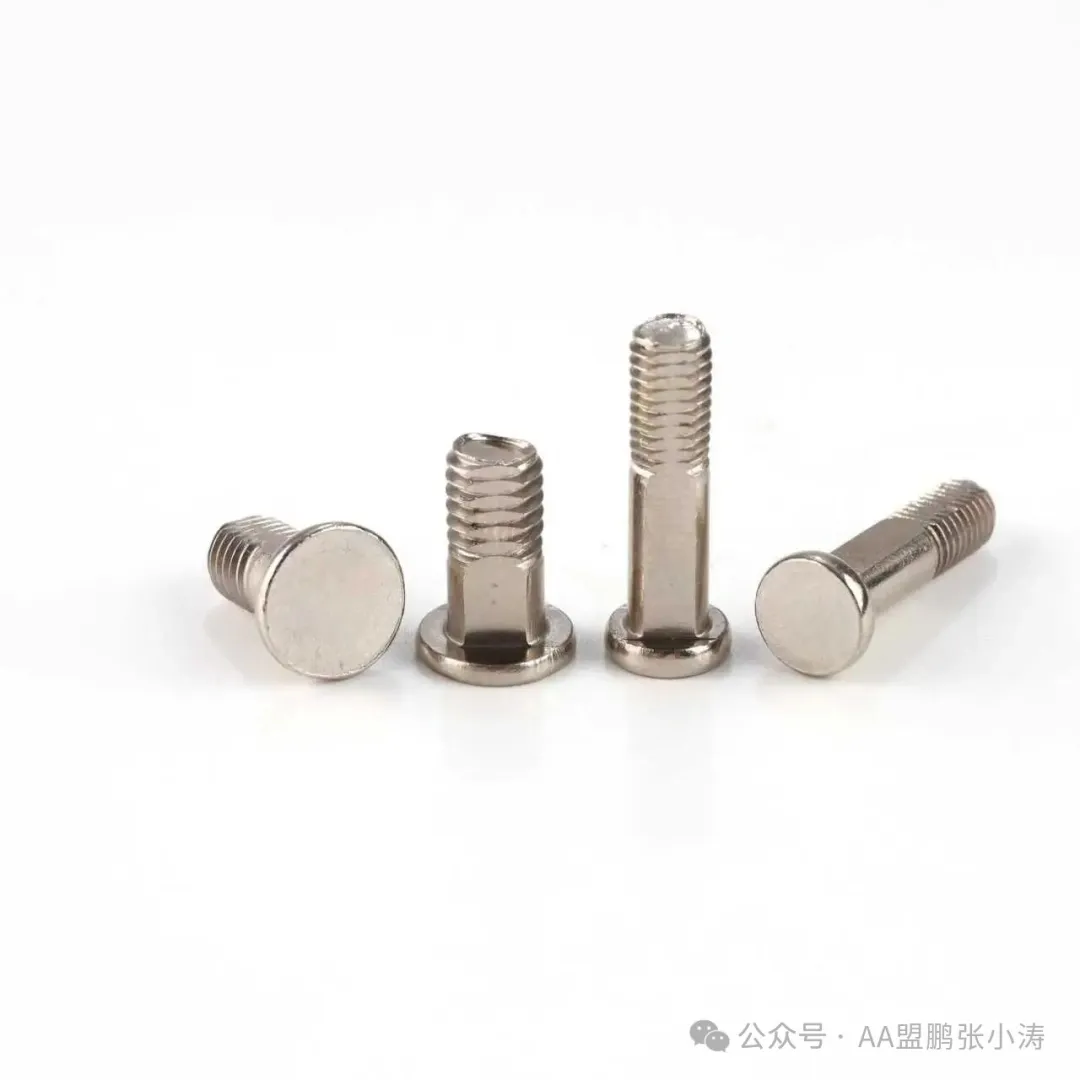
Often referred to as a T Shape Shaft or T Head Shaft, this precision-engineered part serves as the backbone of the entire hinge assembly. Without it, individual washers, brackets, springs, and friction components cannot function as a unified mechanical system.
Key Insight: The T Shaft is not merely a fastener. It acts as the central load-bearing and connecting component that determines the strength, torque stability, durability, and lifespan of a hinge assembly.
Common Misconceptions About Hinges
Many people assume that any two connected parts capable of rotating form a hinge. In reality, such a structure is merely a simple joint.
A true torque hinge consists of multiple precision components working together:
T Shaft
Friction Washers
Belleville Washers
Cam Washers
Brackets
Lock Nuts
Among these components, the T Shaft serves as the central axis around which the entire hinge operates.
Primary Functions of a T Shaft
1. Core Connection Function
The most important role of the T Shaft is to connect all Hinge Components into a single mechanical assembly.
Without the shaft, washers, brackets, springs, and friction elements remain separate components that cannot transmit torque or support rotational movement.
2. Structural Support Function
During operation, hinges are subjected to repeated opening and closing cycles that generate significant torque and mechanical stress.
A forged T Shaft provides the structural rigidity required to maintain alignment and prevent deformation over time.
3. Torque Transmission Function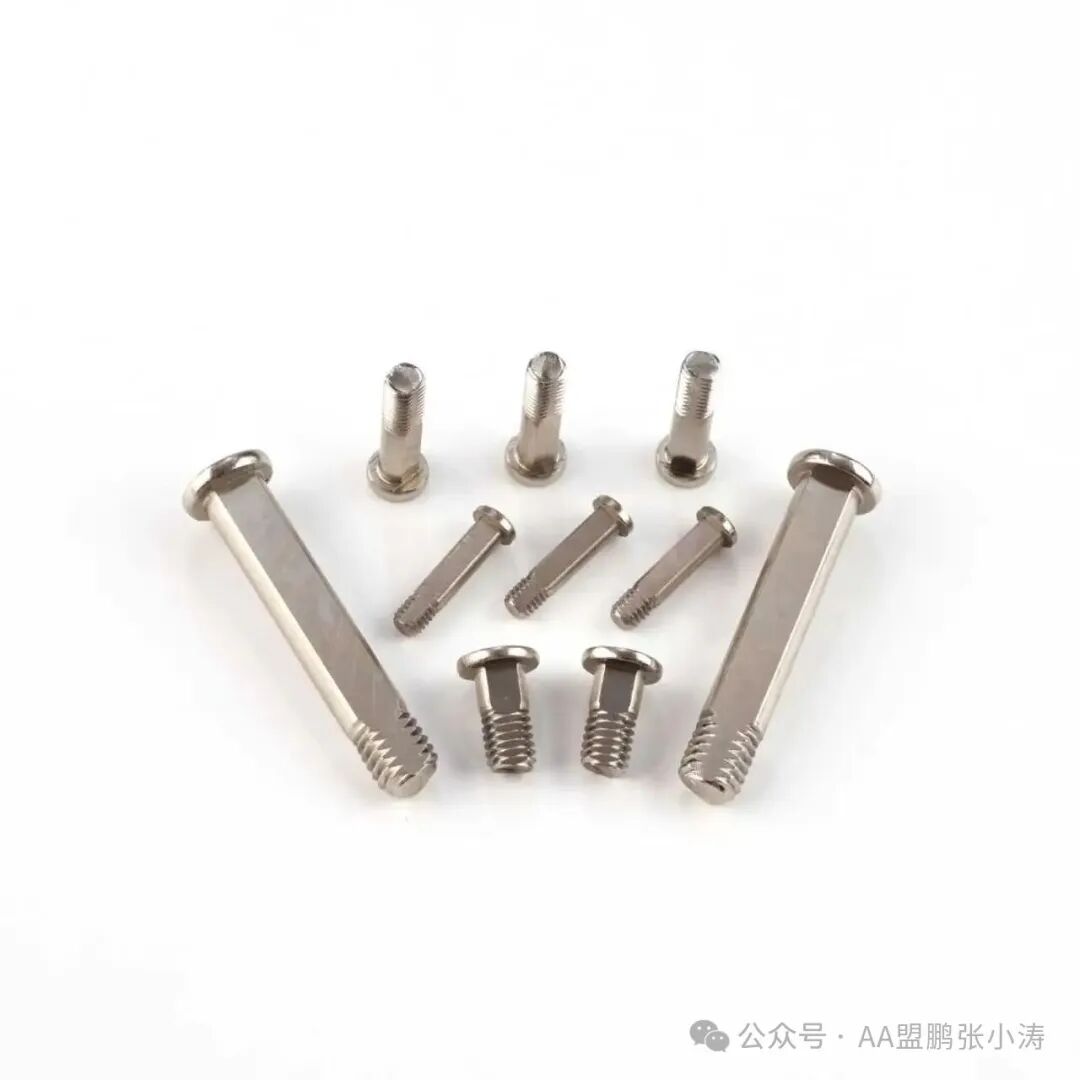
The shaft acts as the central transmission element, transferring rotational force through the friction system and ensuring consistent hinge performance.
4. Functional Integration
When combined with friction washers and cam washers, the T Shaft helps achieve:
Position holding
Automatic return functions
Controlled resistance
Smooth rotational motion
Stable torque output
T Shaft Structural Design
The T Shaft receives its name from its distinctive profile.
| Feature | Description |
|---|---|
| Head Section | Circular disc-shaped head |
| Shaft Body | Cylindrical rod section |
| Flat Side Areas | Machined square surfaces on both sides |
| Thread Section | External threads for assembly locking |
Viewed from the side, the profile resembles the letter "T", which gives the component its name.
Standard T Shaft Specifications
| Parameter | Typical Range |
|---|---|
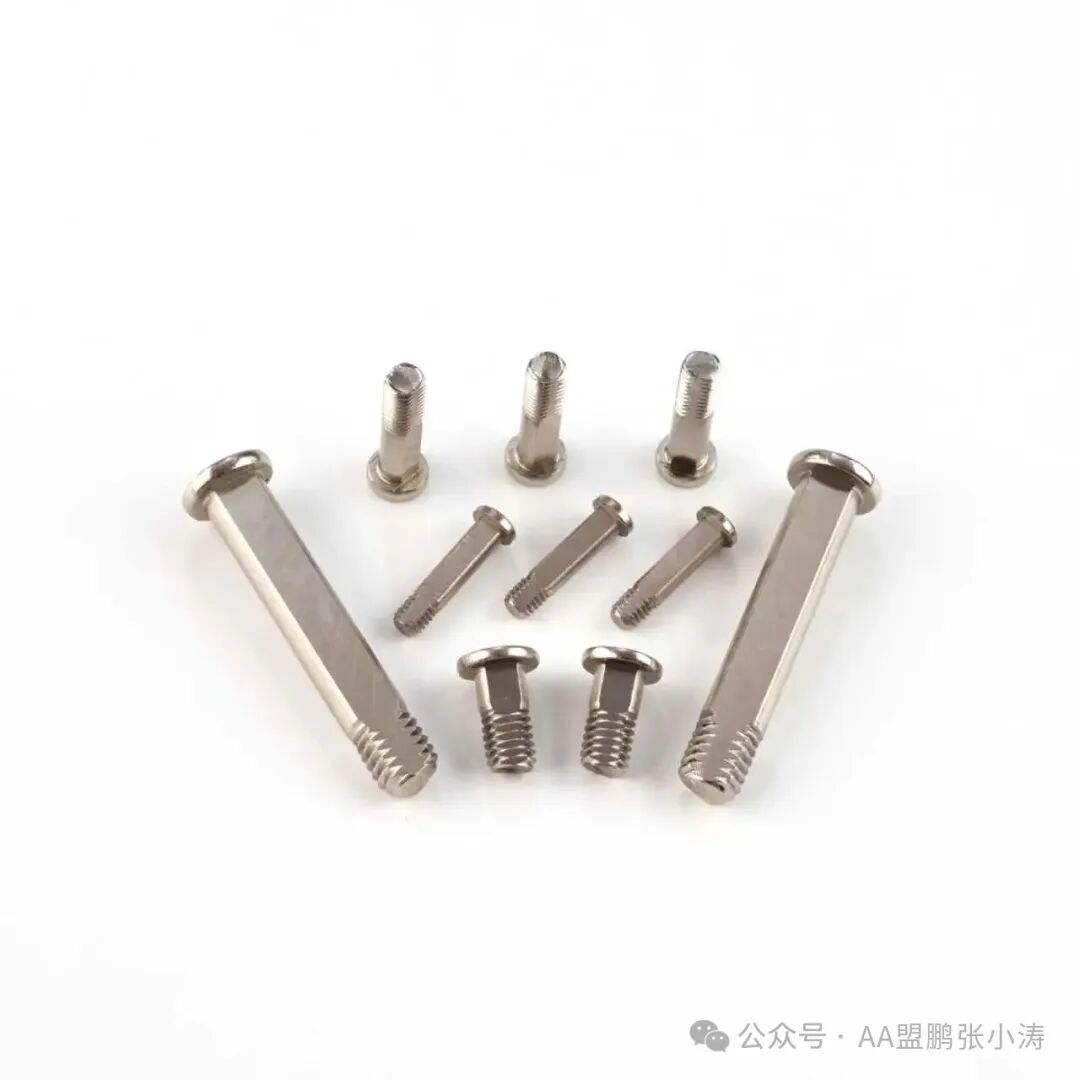
| Thread Size | M3, M4, M5, M6, M8 |
| Overall Length | 13 mm – 50 mm |
| Material | 10B21, 1144 Steel, 1215 Steel, Stainless Steel |
| Hardness | HB80–85 |
Critical Manufacturing Requirements
Precision manufacturing is essential because even small dimensional variations can affect hinge feel and performance.
Square Section Tolerance
The square portion of the shaft must typically maintain a tolerance within ±0.02 mm to avoid excessive clearance and unwanted movement.
Overall Length Control
The combined height of the shaft head and threaded section should generally remain within ±0.10 mm.
Corner Relief Design
The transition between the shaft and head must include proper corner relief to ensure correct assembly with mating components.
Thread Lead-In Design
A tapered lead-in section improves assembly efficiency and reduces installation errors.
Materials Used in T Shaft Manufacturing
| Material | Advantages | Applications |
|---|---|---|
| 10B21 Steel | Excellent forging properties | General torque hinges |
| 1144 Steel | High strength | Industrial hinges |
| 1215 Steel | Good machinability | Precision hinge systems |
| Stainless Steel | Corrosion resistance | Medical and outdoor equipment |
Surface Treatments
To improve corrosion resistance and appearance, T Shafts commonly receive:
Zinc Plating
Black Zinc Plating
Eco-Friendly Zinc Coating
Dacromet Coating
Zinc Alloy Coating
Applications of T Shafts
Laptop Hinges
Monitor Stand Hinges
Automotive Display Hinges
POS Terminal Hinges
Medical Equipment Hinges
Industrial Control Panels
Smart Home Devices
Foldable Electronic Products
How to Select the Right T Shaft
When selecting a T Shaft, engineers should consider:
Required torque level
Available installation space
Total hinge stack thickness
Environmental conditions
Corrosion resistance requirements
Target lifecycle expectations
Choosing the correct shaft length, thread size, material, and surface treatment is critical for achieving long-term hinge performance.
Related Products
Conclusion
The T Shaft is one of the most important components in any torque hinge assembly. Acting as the central structural and load-bearing element, it connects all hinge components while ensuring strength, stability, and reliable torque transmission.
As electronic devices continue to become thinner, lighter, and more sophisticated, the demand for high-precision T Shafts will continue to grow. Manufacturers that invest in precision forging, tight tolerance control, and advanced surface treatment technologies can deliver superior hinge performance and longer product lifecycles.