



 English
Cam washer Design & Sourcing Guide: Convex-Concave Pairing, Detents & Precision Stamping
Direct Answer: A cam washer (convex-concave detent washer) features engineered surface lobes, ramps, and matching depressions that convert rotational motion into controlled axial displacement or tactile detent stops. In laptop hinges, automotive seat adjustments, and medical arms, paired cam washers deliver self-closing forces and positive angle locking without external latches.
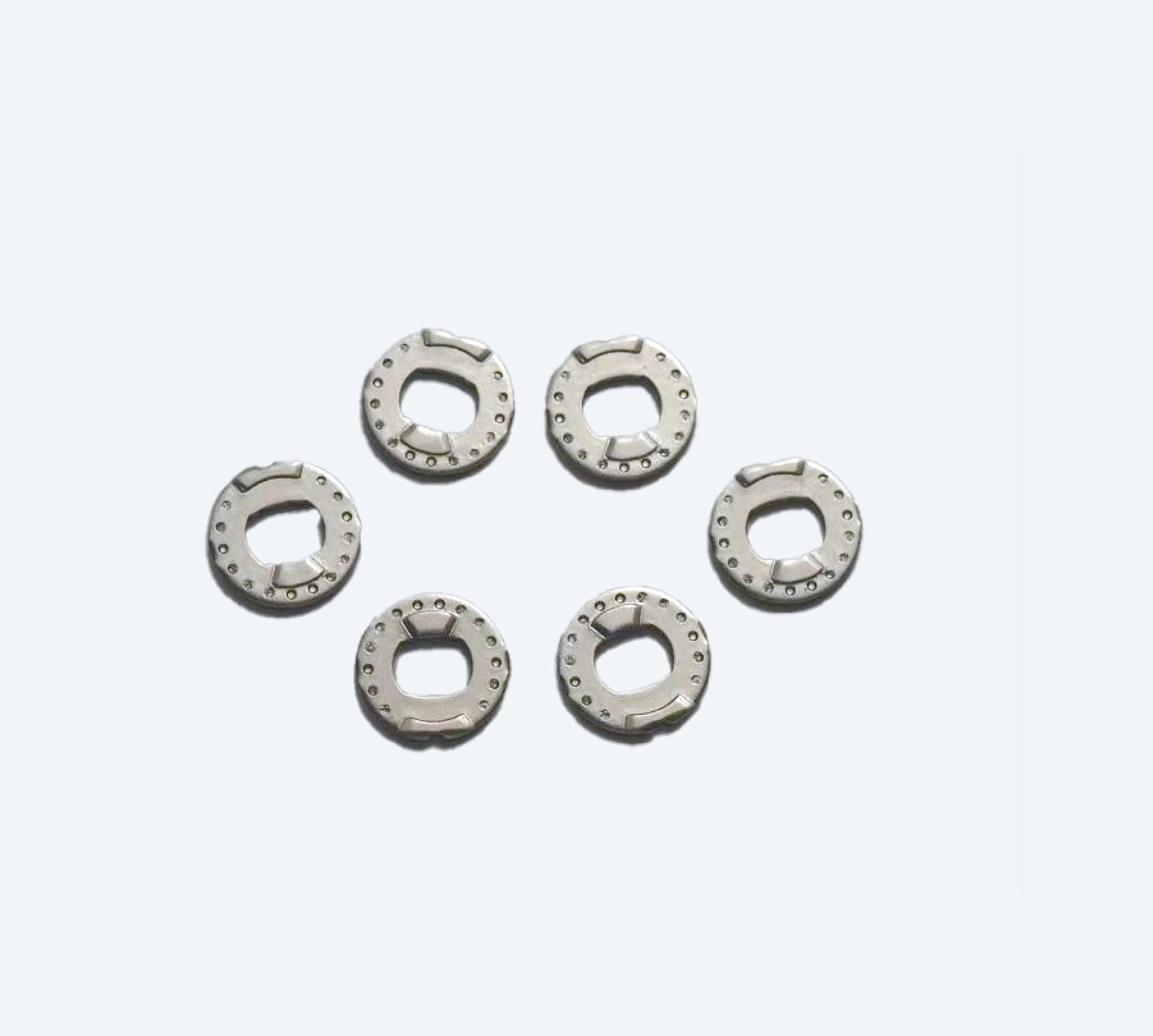
While conventional Flat Washers provide passive sliding surfaces, precision cam washers act as dynamic motion-control components. When combined with preloaded spring stacks, the interaction between matching lobes and valleys creates the distinctive, premium "click" or stepped resistance required in modern consumer electronics and automotive interiors.
Convex vs. Concave Cam Washer Pairing: The Detent Working Principle
Direct Answer: A functional rotary cam detent requires two opposing components: an active convex cam with raised peaks and a stationary concave cam with recessed pockets. As the mechanism rotates, the lobes climb the ramps to compress the axial springs, dropping into the recesses at target angles to lock position.
| Cam Component | Surface Geometry | Kinematic Motion | System Function in Hinge |
|---|---|---|---|
| Convex Cam Washer | Protruding radial lobes (1–4 peaks) | Rotates synchronously with shaft / bracket | Drives axial displacement against preloaded spring stack |
| Concave Cam Washer | Matching radial indents / valleys | Anchored stationary via anti-rotation tabs | Defines rest positions (e.g., closed 0°, open 135°, flat 180°) |
| Flat Friction Interface | Mirror-polished flat planar face | Rotational slip against adjacent disc | Supplies continuous background damping between detent steps |
Need custom detent angles or convex-concave pairing sets? Review our Limit Stop and Cam Solutions to evaluate standard stock die configurations.
Key Stamping Tolerances & Ramp Geometry for Smooth Haptic Feedback
Direct Answer: Cam ramp angle (typically 15°–35°) dictates the ratio of rotational input torque to axial spring compression, while lobe height tolerance must be maintained within ±0.015mm. Insufficient stamping coining pressure creates wavy ramp profiles that cause tactile roughness, hesitation, or premature lobe rounding.
| Design Parameter | Typical Stamping Tolerance | Mengpeng Precision Level | Functional Mechanical Result |
|---|---|---|---|
| Lobe Peak Height (H) | ±0.04 mm | ±0.015 mm | Eliminates rotational torque variation across batches |
| Ramp Angle (α) | ±1.5° | ±0.5° (Coining Die) | Ensures buttery, consistent effort during opening and closing |
| Center Bore Concentricity | ≤ 0.05 mm | ≤ 0.015 mm | Prevents off-axis shaft tilting and asymmetric ramp wear |
| Surface Finish (Ra) | Ra 0.8 μm | Ra ≤ 0.25 μm (Tumbled) | Prevents dry friction galling and operational squeaking |
In rotary hinge designs, cam washers operate directly alongside Belleville Conical Washers to supply constant axial pre-compression, and Thrust Flat Washers to isolate rotational forces.
Material Selection & Heat Treatment for 20,000+ Cycle Lifespan
Direct Answer: Premium high-carbon spring steels (SK5, SK7, 65Mn) heat-treated to HRC 46–52 provide the necessary compressive yield strength to prevent lobe flattening during continuous cycle testing. For chemical or humid environments, precipitation-hardened 17-7PH stainless steel delivers high spring temper without magnetic distortion.
| Material Grade | Hardness Level | Surface Coating Option | Recommended End Application |
|---|---|---|---|
| SK5 Carbon Tool Steel | HRC 48 – 52 (Oil Quenched) | Black Oxide / Lubricating Oil | High-cycle laptop 360° hinges, consumer monitors |
| 65Mn Spring Steel | HRC 44 – 50 (Austempered) | Electroless Nickel Plating (Ni-P) | Automotive center console covers, folding tables |
| 17-7PH Stainless Steel | HRC 42 – 48 (TH1050 Condition) | Passivated & Ultrasonic Cleaned | Surgical display booms, marine control interfaces |
Why Sourcing from Mengpeng Optimizes Stamped Cam Washer Production
Direct Answer: Dongguan Mengpeng utilizes multi-station progressive stamping and precision coining presses to form complex 3D cam ramps and oil reservoir grooves in a single continuous stroke. With over 1,700 standard tooling sets and daily output of 3 million pieces, we frequently supply matching convex-concave samples within 48 hours without mold tooling costs.
Operating under certified ISO 9001 quality management, every production batch undergoes 100% automated optical inspection (AOI) to verify ramp profiles, lobe heights, and center bore perpendicularity before shipment. Mengpeng serves global leaders across automotive, consumer electronics, and healthcare manufacturing.
Ready to review CAD drawings or develop a custom cam detent geometry? Contact our technical engineering team through the Mengpeng RFQ Contact Page or email your specifications directly to sale1@mphardware.com for DFM analysis within 24 hours.
Frequently Asked Questions (FAQ)
What is the primary difference between a cam washer and a Limit Stop Washer?
A cam washer uses ramps and lobes to create stepped tactile resistance or self-closing force across continuous angles. A limit stop washer features physical mechanical tabs that create a hard, unyielding stop at an absolute travel boundary (e.g., stopping abruptly at 135 degrees).
How do Belleville washers interact with cam washers in a hinge assembly?
Belleville conical spring washers supply the continuous axial preload required to press the convex and concave cam lobes together. When rotating over the ramp, the cam washer compresses the Belleville spring, which then snaps the lobes back into the detent pockets.
Can cam washers feature lubrication retention grooves?
Yes. Mengpeng's progressive stamping dies can coin micro-dimples or spiral grease channels directly into the cam ramp faces. This retains high-viscosity damping grease, preventing dry friction wear and ensuring silent operation over decades.